Harmonic major is a tonal system that emerged in the harmony of the Romantic era.
It is a conditionally diatonic mode, characterized by a major scale with a lowered 6th degree.
Listen to, play, and sing the harmonic C major scale:

In harmonic major, the lowered 6th scale degree significantly changes the sound of the subdominant and some dominant chords, shifting them toward a minor quality.
Listen to, play, sing, and compare the following chords in both natural and harmonic C major:
Chords that include the 6th degree in the natural C major scale:

Chords that include the lowered 6th degree in the harmonic C major scale:

The lowered 6th scale degree is especially noticeable in the subdominant triad (the chord built on the 4th degree) and its inversions, which become minor in the harmonic major. As a result, the music acquires a softer, more emotional, and sometimes sad character. This effect is partiqularly strong when the minor subdominant triad follows the major one through a chromatic change between the natural and lowered 6th degrees.
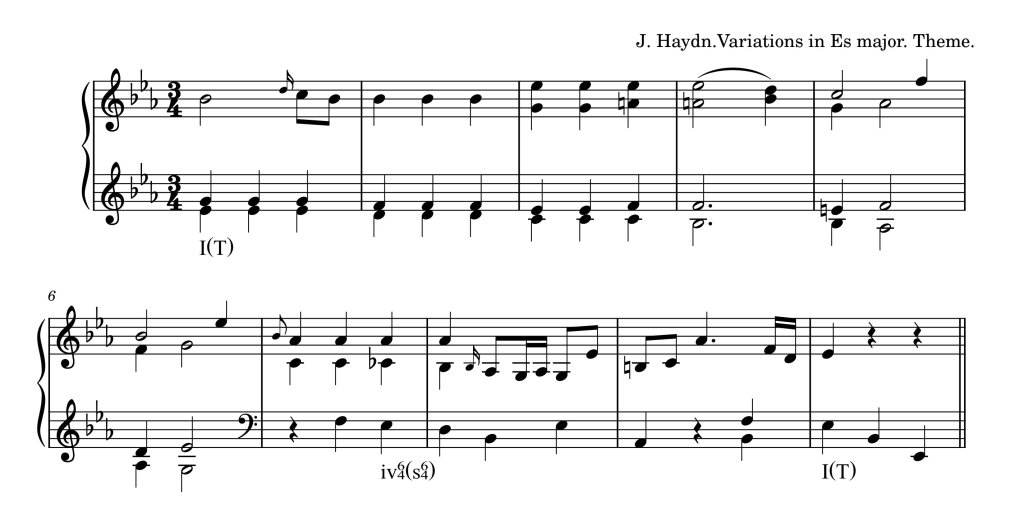
An example of the lowered sixth degree from the harmonic major scale can be found in bar 7 of the theme from Haydn’s Variations in E-flat major:
Let’s explore the use of the harmonic major in the music of Schumann and Radiohead
In theory, the harmonic major—like the harmonic minor—deviates from the strict diatonic system, moving toward a major-minor and chromatic framework. This represents one of the steps in the expansion of the tonal harmony system.

Leave a comment