Melody is one of the most important elements, or rather components, of music that you can sing or whistle. It is a series of notes that sound one after another, a musical thought expressed in a single voice.
The term melody derives from the Ancient Greek μελῳδία (melōidía) — “singing in lyrical poetry,” and μέλος (melos) — “song.”
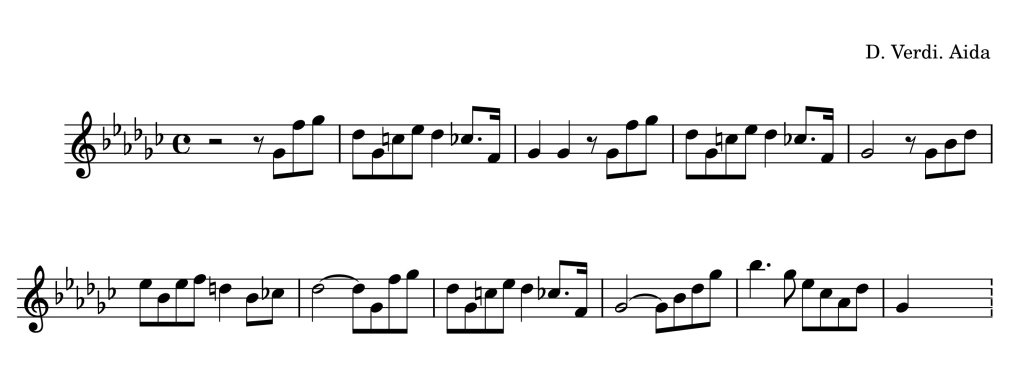
Each melody has its own line or contour, which is typically wavy and includes various qualities or forms of melodic motion:
Example 1
The basic forms of melodic motion are as follows:
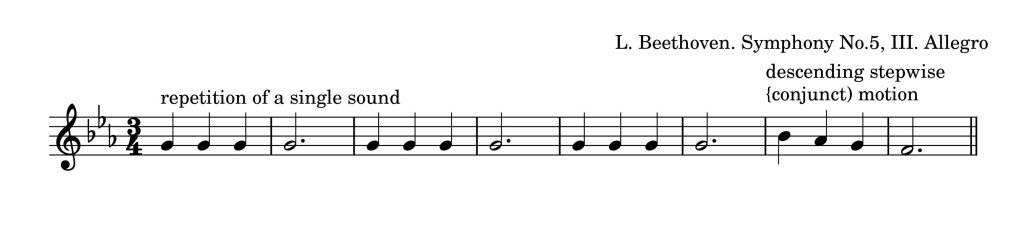
repetition of a single sound (see Example 2 below, mm.1-6)
stepwise melodic motion, also known as conjunct motion, that can move either ascending or descending
Example 2
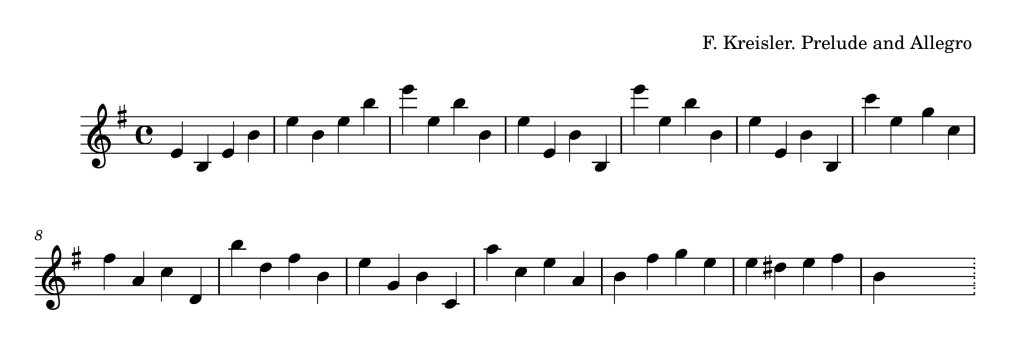
skipwise motion, also known as disjunct motion
Example 3
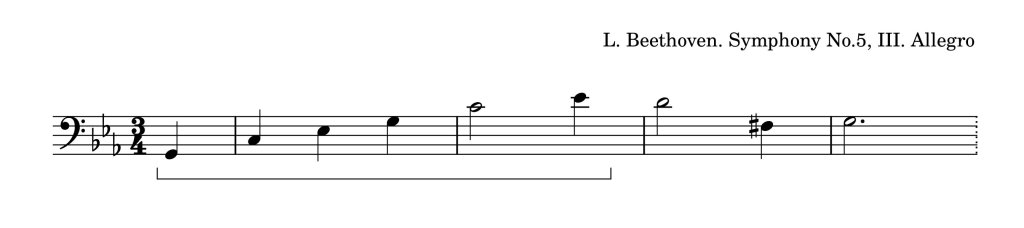
Additionally, a melody may progress through notes that form chords
Example 4
There are fundamental elements of melody:
1) musical sound as the basic unit of melody;
2) melodic interval as the distance between two successive notes within a melody, musical intonation;
3) motive (or motif) as a short melodic structure;
4) phrase — a relatively complete musical idea, often similar to a sentence in language.
Melodic development refers to the techniques used to vary, expand, and transform a melody throughout a musical composition.
Each melody’s character is also inseparably tied to its own mode, meter, rhythm, tempo, timbre, and register.
Additional important aspects of melody include:
Range — the interval between the highest and lowest notes within a melody
Tessitura — the general pitch register most consistently employed by a melody
The study of melody is a foundational aspect of music theory and practice. By understanding the features of melodic construction, movement, and development, you can begin to create your own original melodies.
Question 1: What chords are formed by the notes of melody in Example 3?
Question 2: What are your favorite melodies, and what specific features make them meaningful to you?

Leave a comment