A common (pivot) chord modulation provides gradual, more smooth ways to change a tonal center (tonic) by using a common chord, also known as a pivot chord, that belongs to both the home and the goal keys.
A common (pivot) chord typically is a triad or a sixth chord.
This type of modulation can work in little different ways. It can incorporate both diatonic and chromatic elements.
Within the next example, there is a modulation to the key of the 5th scale degree (from F minor to C minor) through the diatonic tonicization of the common chord Ab major.
Example 1. L. van Beethoven. Overture to “Egmont”, Op. 84, mm.1-5.
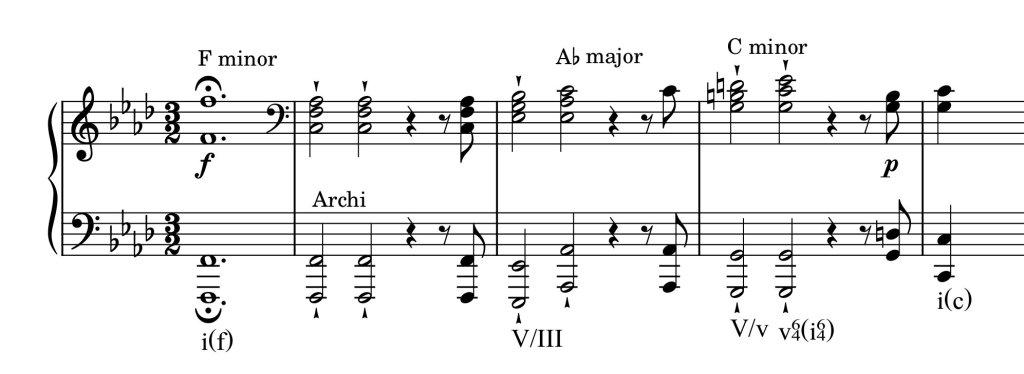
The modulating chord exclusively belongs to the key you are transitioning to. It often takes the form of a dominant chord, known as a secondary dominant, serving to prepare the new key and resolve into its tonic chord.
Common (pivot) chord modulation with chromatic elements in the modulating chord
Example 2.
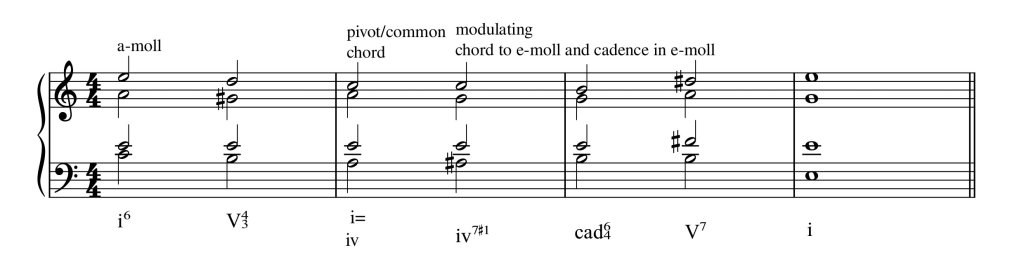
Pay attention: Modulation will sound smoother if a common/pivot chord and the next modulating chromatic chord (chord from key you are moving to) include common notes:
Exmple 3.
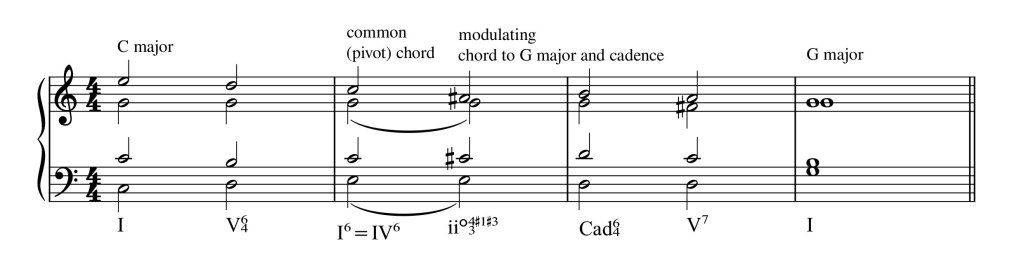
A particular case of the gradual modulation is tonicization (deviation)–a brief emergence of a new key (secondary, local tonic) without anchoring it with a cadence (a specific chord progression at the end of the musical section or the whole piece).
In contrast, proper modulation establishes the new tonic with a cadence.
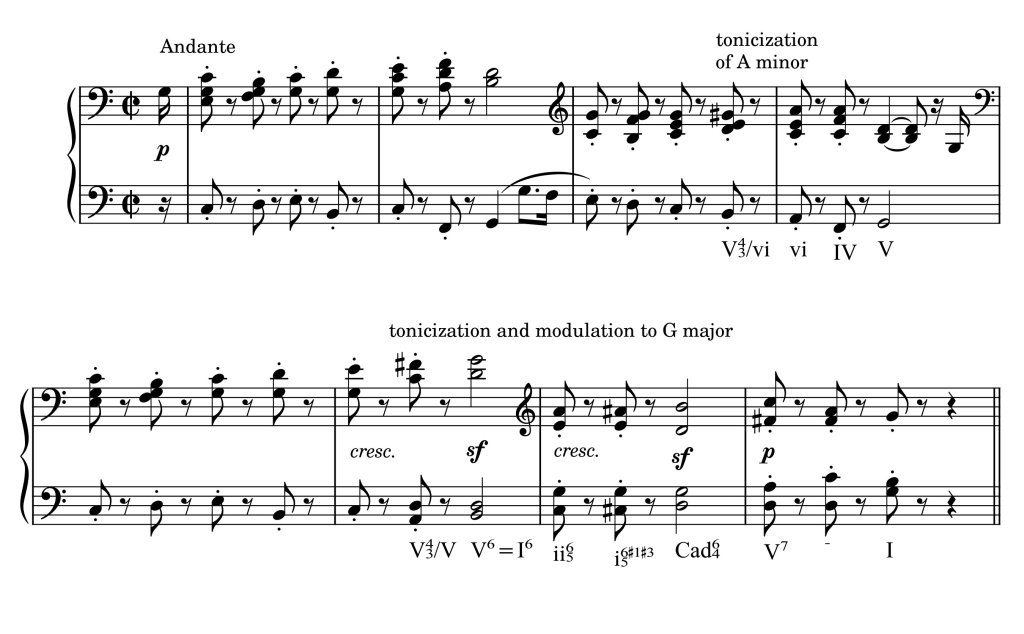
Below there is an illustration of tonicization of A minor (submediant triad) and modulation (tonicization of G major is solidified in the cadence as the new tonic):
Example 4.
L. van Beethoven. Piano Sonata in G major, Op. 14, No 2, Andante, mm. 1-8:

Leave a comment