Triads in four-part (SATB) harmony
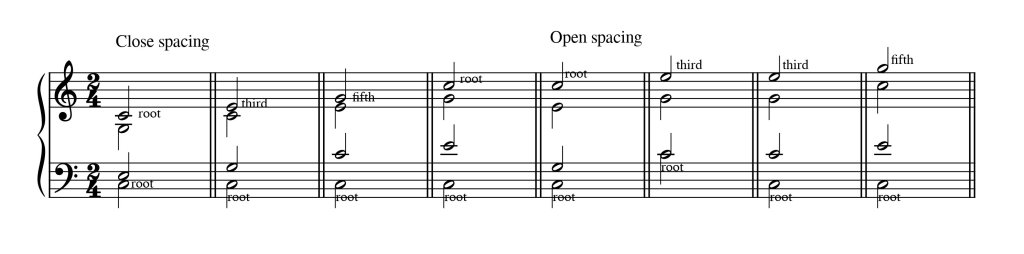
In four-part harmony (also known as SATB choral style), triads are used with one of the notes doubled. Typically, the root note is the one that gets doubled. Depending on which chord tone is in the upper voice (soprano), there are three melodic positions of the triad: the root, the third, and the fifth.
In four-part harmony, chords can be arranged in close, open, or mixed spacing. Triads are typically arranged in close and open spacing, while a mixed arrangement of triads is used only in special cases.
Compare the arrangement of triads in the example below:
VI53 triad of the 6th scale degree (submediant)
II6 The sixth chord of the second scale degree (supertonic)
Practice here
Seventh chords in four-part (SATB) and jazz harmony
Seventh chords are used to create tension and resolution, as the dissonance in a chord tends to resolve into a more stable sound.
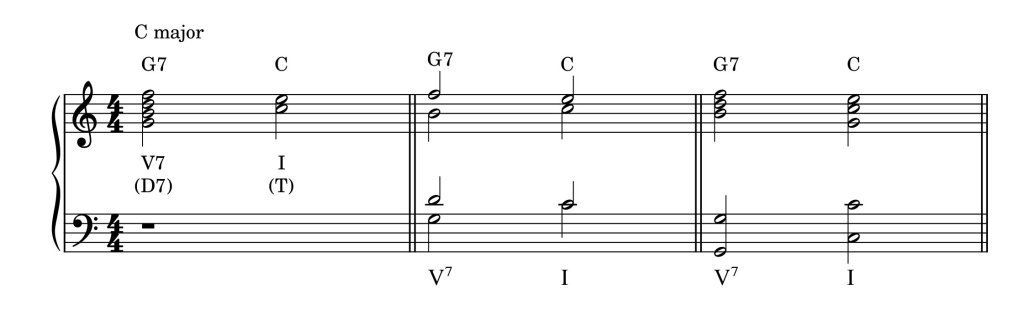
For example, the dominant seventh chord (V7) is commonly found in many styles of music because it strongly gravitates toward the tonic chord (I), creating a sense of tension and resolution:
Leading-tone seventh chord (VII7)
The supertonic seventh chord (II7)
Seventh chords can be used in a various musical contexts, including jazz, blues, classical, and popular music. They add harmonic color and expression, enabling composers and musicians to create diverse and engaging musical compositions.
Modulation
Modulation is the transition from one key to another, involving a shift of the tonal center (tonic).
Modulation is one of the fundamental resources for creating variety in tonal music. It serves to produce various effects and convey different moods. It can include a range of techniques, from subtle shifts to abrupt changes.
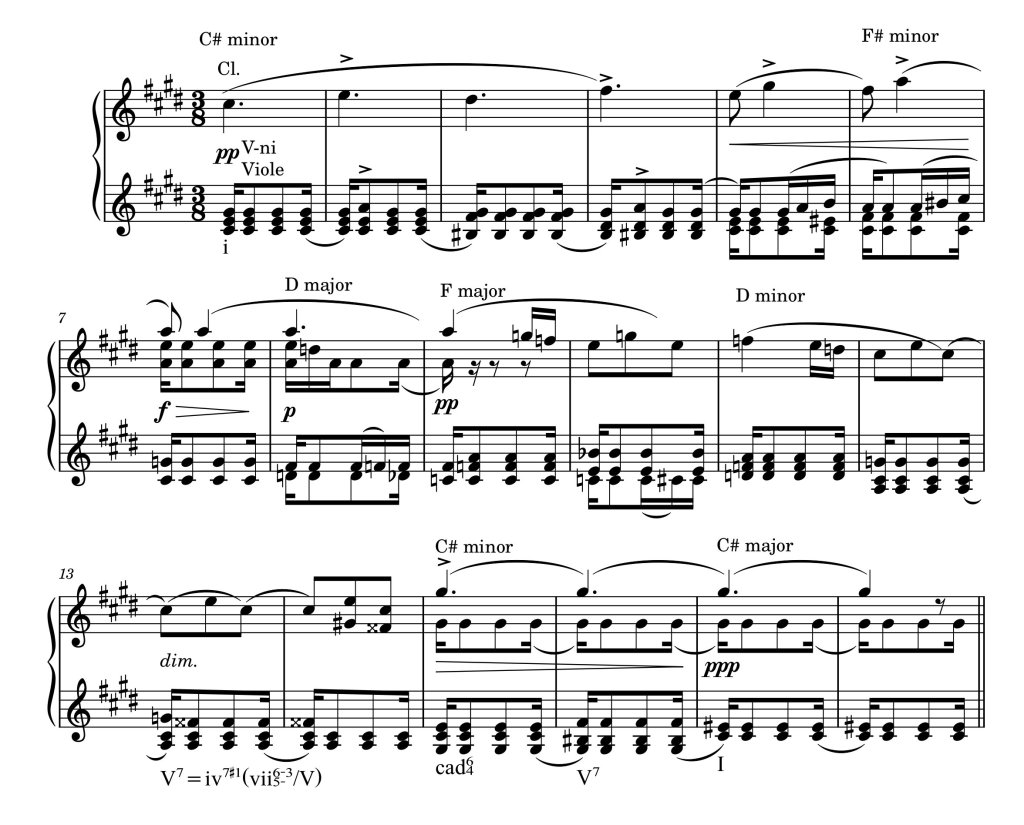
The following example conveys a wide range of emotions through a series of wonderfully colorful modulations:
Franz Schubert Symphony No. 8 in B minor also known as the “Unfinished Symphony”, II. Andante con moto, second theme, mm.66-83 (Leningrad Philharmonic Orchestra, conductor Evgeny Mravinsky):
Composers use various techniques to transition between different keys.
The most common types of modulation include:
- Common (pivot) chord modulation
- Phrase (direct) modulation
- Sequential modulation
- Chain modulation
- Enharmonic modulation
- Changes between major-minor keys
- Common-tone modulation
Various types and techniques of modulation serve different musical purposes. Modulation can alter the mood of a piece, introduce contrasts, and develop musical ideas. Composers choose specific modulation techniques based on what they wish to convey in their music.

Leave a comment