Modulation is the transition from one key to another, involving a shift of the tonal center (tonic).
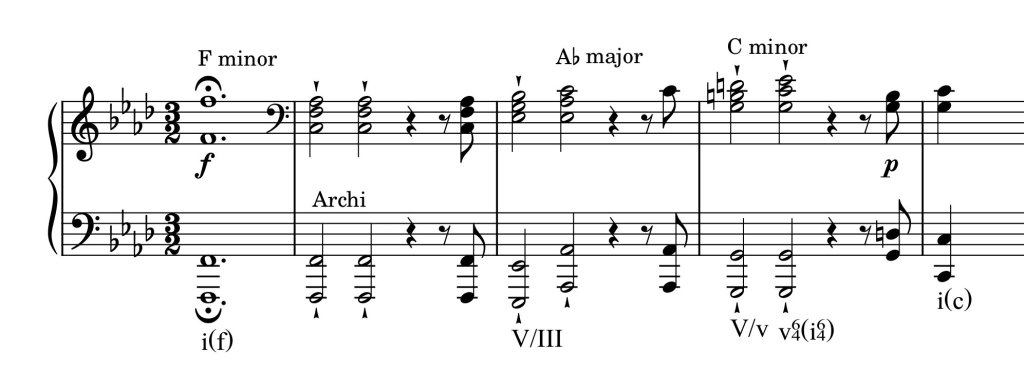
Within the next example, there is a modulation to the key of the 5th scale degree (from F minor to C minor) at the end (mm. 4-5) of the long sentence:
Example 1.
L. van Beethoven. Overture to “Egmont”, Op. 84, mm.1-5.
Modulation is one of the fundamental resources for creating variety in tonal music. It serves to produce various effects and convey different moods. It can include a range of techniques, from subtle shifts to abrupt changes.
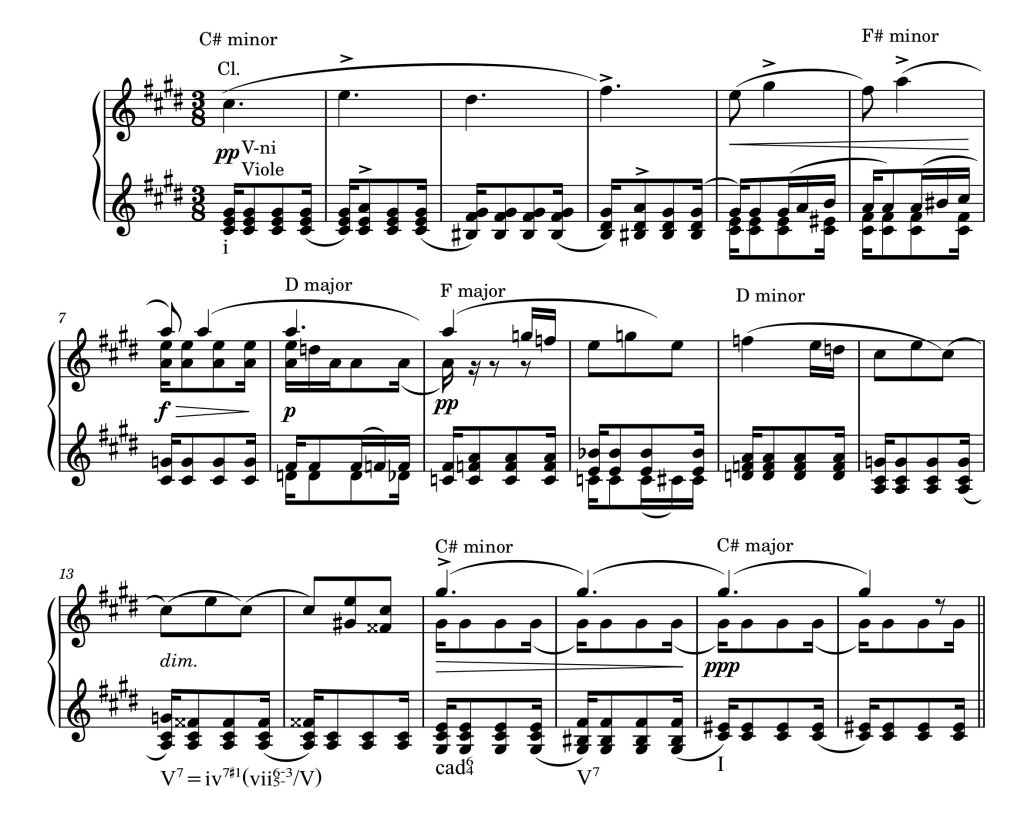
The following example conveys a wide range of emotions through a series of wonderfully colorful modulations:
Example 2.
Franz Schubert Symphony No. 8 in B minor also known as the “Unfinished Symphony”, II. Andante con moto, second theme, mm.66-83 (Leningrad Philharmonic Orchestra, conductor E. Mravinsky):
Modulation vs tonicization
In a narrow sense, modulation entails a more definitive transition from one key to another, firmly establishing the new tonic within a complete cadential progression.
A brief emergence of a new key (secondary tonic) followed by either a return to the main tonic or a transition to another key is called tonicization. It is often contrasted with modulation, but in fact can be considered as its specific case.
In music, modulation encompasses various techniques for transitioning between different keys.
The most common types of modulation:
- Common (pivot) chord modulation
- Phrase (direct) modulation
- Sequential modulation
- Chain modulation
- Enharmonic modulation
- Changes between major-minor keys
- Common-tone modulation
Various types and techniques of modulation serve different musical purposes. Modulation can alter the mood of a piece, introduce contrasts, and develop musical ideas. Composers choose specific modulation techniques based on what they wish to convey in their music.
Exercises on modulations
