What is it, and how does it work?
Moving from one key to another while changing the tonal center (tonic) is called modulation.
Ex. 1
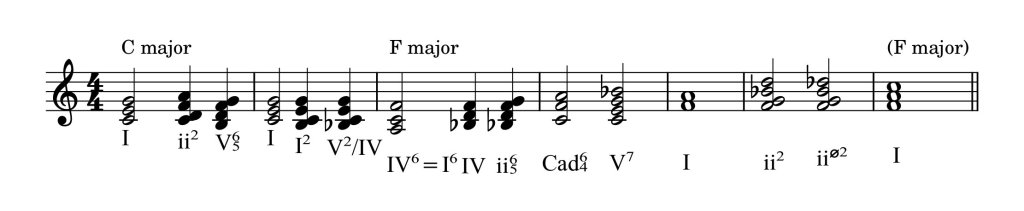
Modulation vs tonicization.
A specific case of modulation is a brief modulation that is also called a tonicization. This is essentially a brief emergence of a new key (secondary tonic) followed by either returning to the main tonic or shifting to another key.
Tonicization most commonly occurs through the chord of the secondary dominant (chords of the 5th and the 7th scale degrees) to one of the secondary tonic (secondary key) – triads or their first versions of the 2nd (only from major), 4th, and 6th degree (predominant chord group).
Tonicization of the 2nd degree (supertonic), of the 4th degree (subdominant), and of the 6th degree (submediant) in major:
Ex. 2
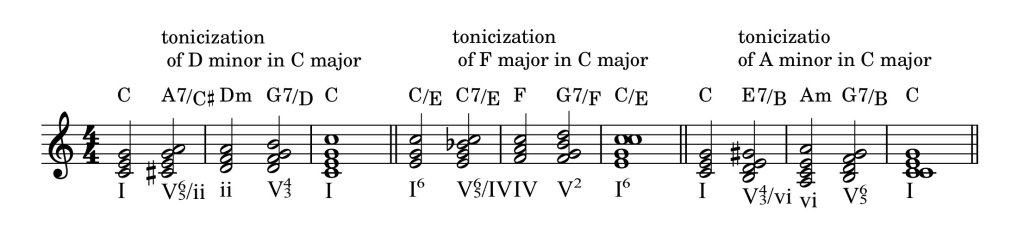
Tonicization of the 4th degree (subdominant) and of the 6th degree: (submediant) in minor:
Ex. 3
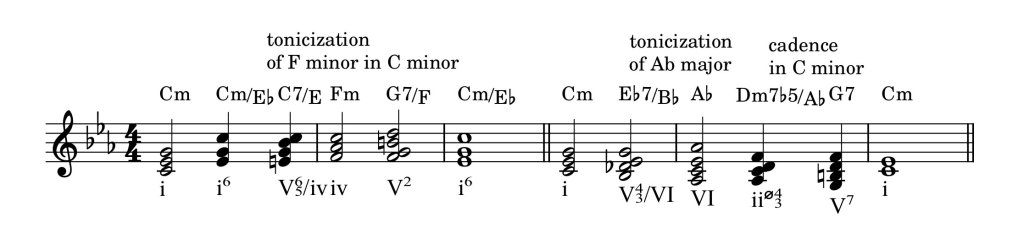
Secondary chords highlight diatonic chords, temporarily attributing to them the significance of a secondary tonic. At the same time, the diatonic function of the secondary tonic within the primary key remains unaltered.
Modulation in the narrow sense of the term entails a more definitive transition from one key to another, firmly establishing the new tonic within a complete cadence.
A cadence typically is a chord sequence that concludes a musical structure or phrase. It consists of a series of chords affirming either the main or the new tonic:
Ex. 4
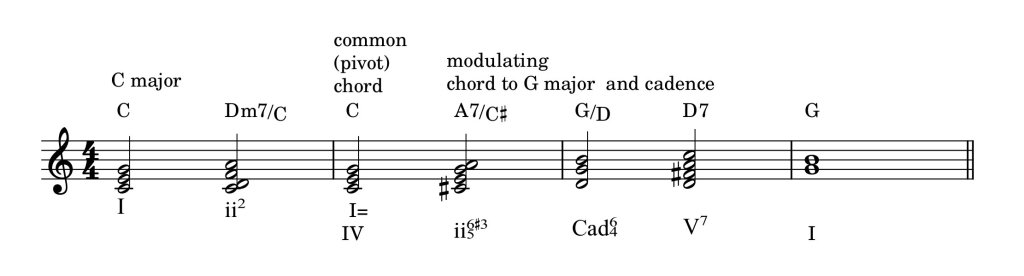
Various types and methods of modulation serve different musical goals. Modulation can alter the mood of music, introduce contrasts, and develop musical ideas.
Composers choose specific modulation techniques based on what they want to convey in their music.
