Seventh chords play a significant role in music theory and harmony. These are four-note chord structures, usually built by stacking thirds. In other words, a seventh chord typically consists of a triad above the root, with an additional note that forms an interval of a seventh above the chord’s root:
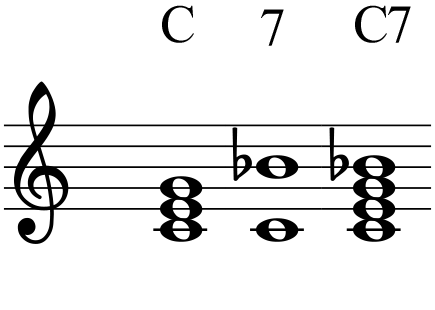
The seventh chord is considered a dissonant chord:
The notes produce a seventh chord are named according to the intervals they form with the chord’s root – third, fifth, seventh:

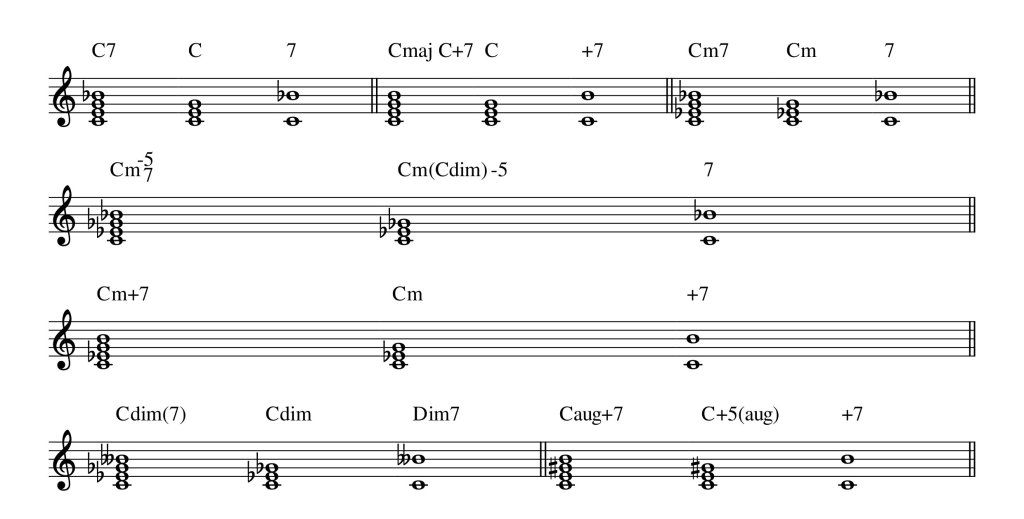
In traditional music theory, there are seven types of seventh chords:
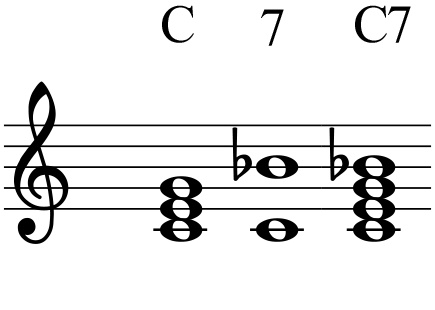
- The major-minor seventh chord (often abbreviated as 7), also known as the dominant seventh chord is the most common type of seventh chord. It is built from a major triad with a minor seventh interval added above the root:
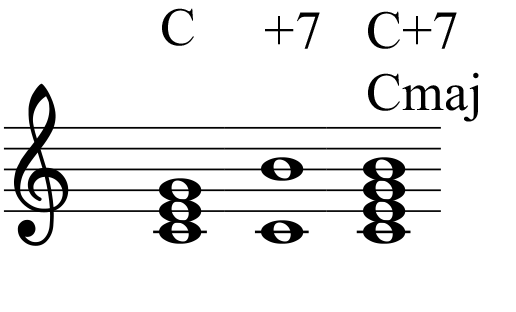
2. The major seventh chord (often abbreviated as M7 or maj7) combines a major triad with a major seventh interval above the root. This unique structure contributes to its bright and cheerful sound:
 3. The minor seventh chord (m7) built from a minor triad with a minor seventh above the root, conveys a sense of melancholy:
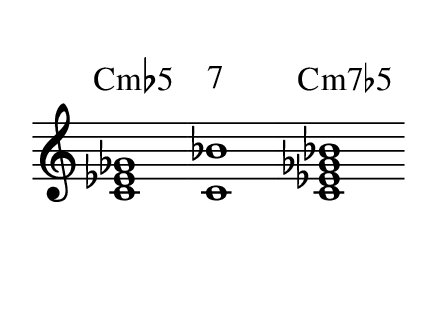
4. The minor seventh flat five chord (m7♭5), also known as the half-diminished seventh chord, is associated with a melancholic or bluesy sound. It’s constructed with a diminished triad on the root and a minor seventh interval added above the same root:
5. The minor-major seventh chord (often abbreviated as m+7) combines a minor triad with a major seventh interval above the root. This creates a unique and ambiguous sound, distinct from both the major and minor seventh chords:
6. The diminished seventh chord (dim7), known for its tense and tragic sound, is built by stacking minor thirds above the root. In other words, it is composed of a diminished triad plus a diminished seventh interval above the root:

7. The augmented major seventh chord (augM7) is built from an augmented triad with a major seventh interval added above the root. This unique structure creates a tense and dissonant sound:

Explore the diverse sounds of seventh chords. Each chord is built differently, resulting in unique harmonies. Play, sing, and compare the examples below to experience this variety firsthand:
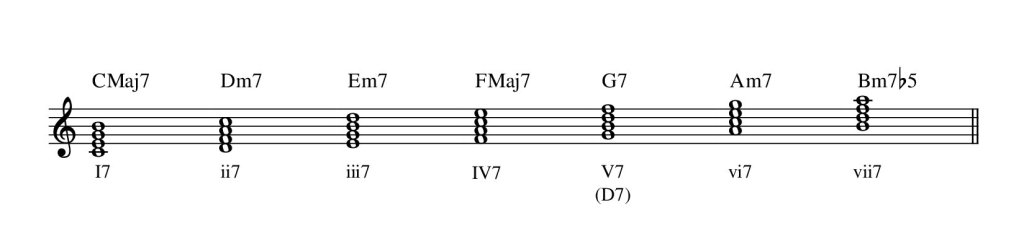
Seventh chords can be created on each degree of the major scale, as demonstrated in the key of C major (C-dur). In harmonic analysis they are often designated by Roman numerals to indicate their function in the key or progression. For example, a seventh chord built on the first degree of the scale would be designated I7. Likewise, a dominant seventh chord built on the fifth degree would be designated V7 (or D7 – dominant seventh chord):
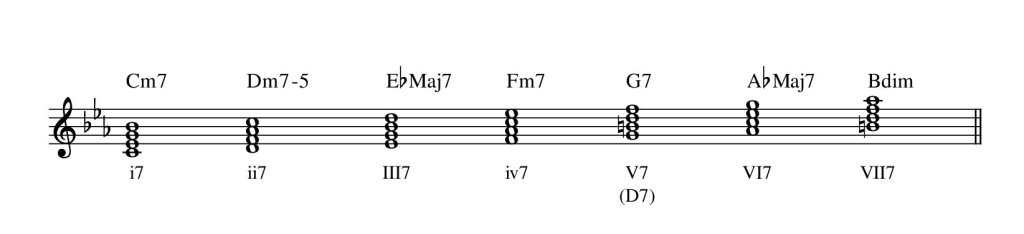
Seventh chords can also be constructed on each degree of the minor scale. Here’s an example using the key of C minor (c-moll). Note that the V7 and vii7 chords are typically used in harmonic minor form with a raised seventh:
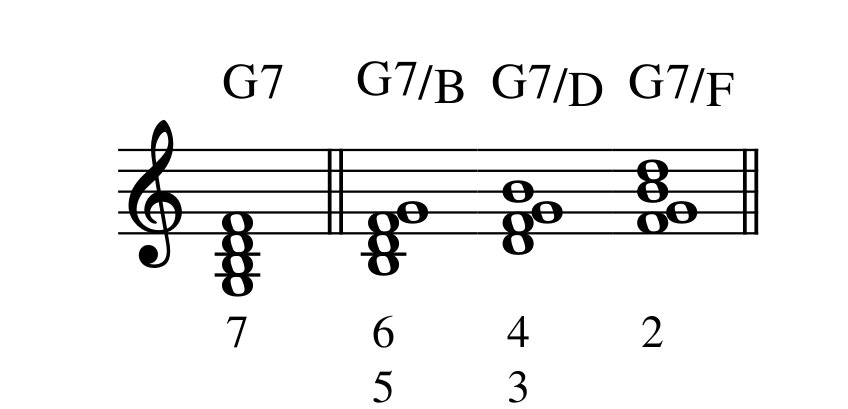
Any seventh chord has three inversions. They can be created by moving the root note up one or two octaves and rearranging the remaining notes.
- The first inversion has the third tone in the lower voice (indicated by the numbers 65);
- The second inversion has the fifth tone in the lower voice (indicated by the numbers 43);
- The third inversion has the seventh tone in the lower voice (indicated by number 2):
Seventh chords are used to evoke tension and resolution, as the dissonance within the chord tends to resolve into a more stable sound. For example, the dominant seventh chord (often represented as D7 or V7) is prevalent in various musical styles due to its strong tendency to resolve towards the tonic chord (usually represented as T or I), thereby establishing a sense of tension and subsequent resolution.

Leave a comment