In the context of functional harmony, the submediant chord is a triad with the 6th scale degree in the root.
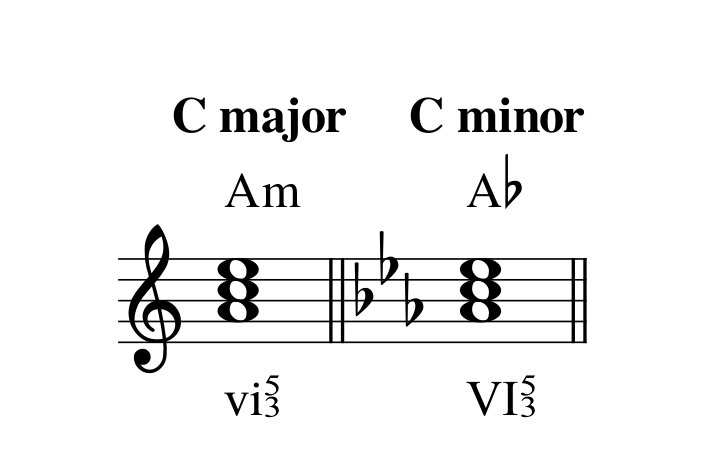
For example, in the key of C major, the submediant chord is an A minor triad (symbolized by vi). In a minor key, like C minor, the submediant chord would be an Ab (As) major triad (symbolized by VI):
Example 1.
A submediant triad is the weakest predominant chord.
Play, listen and compare pieces below.
Example 2.

Example 3.

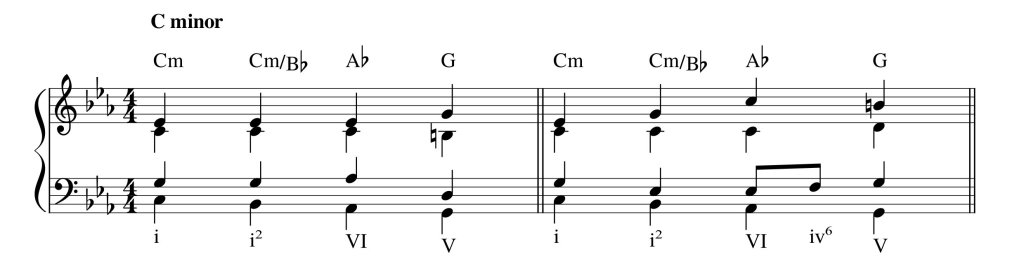
The chord progressions in Example 3 sound more expressive, don’t they? This is the effect of the submediant, or, a triad with the 6th scale degree of the key in the root (notated as VI53) that provides a smooth descending bass line.
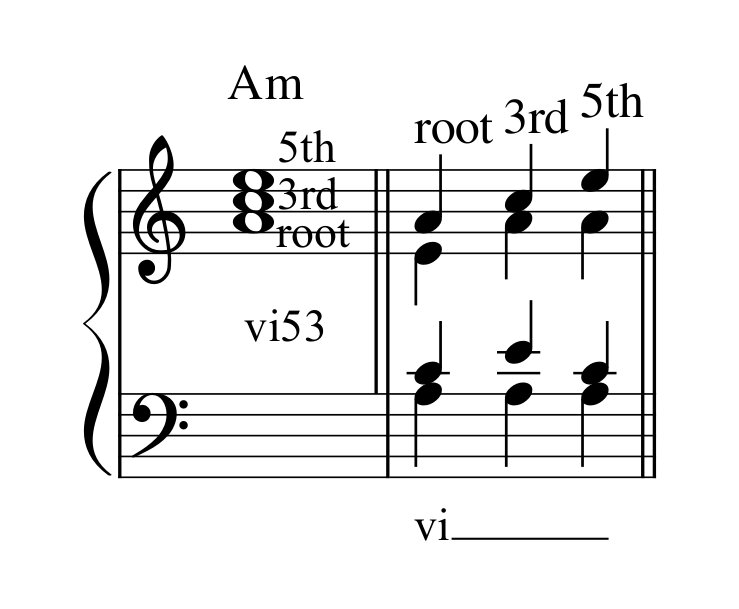
A triad with the 6th scale degree in the root (VI53) consists of the 6th (the root), 1st (the third tone) and 3rd (the fifth tone) scale degree.
In four-part (SATB) harmony VI53 can be used in various melodic positions.
Let’s take the key of C major:
Example 4.
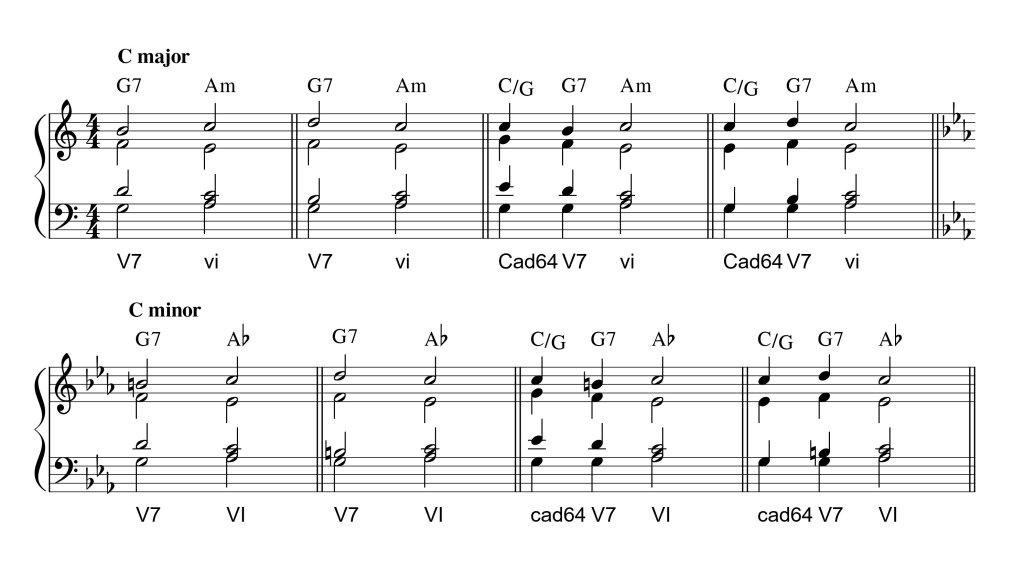
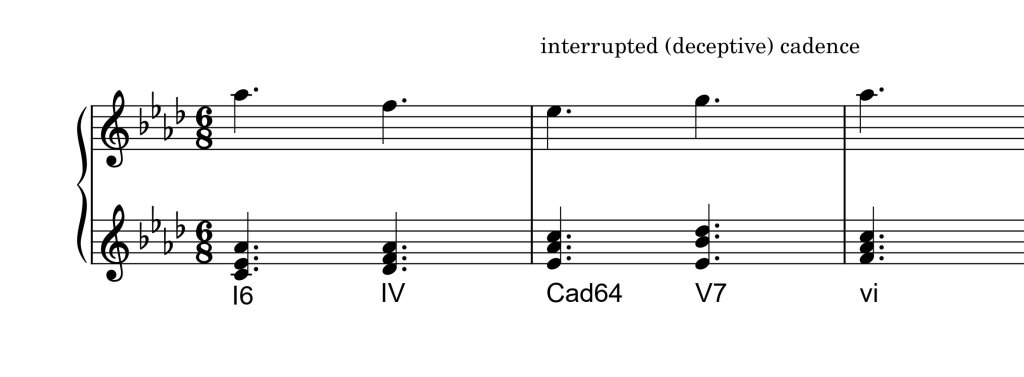
This triad serves various functions depending on the context of the music and the key being played. VI53 can be used instead of tonic (the first scale degree and a triad with the first scale degree in the root) in an interrupted (also known as deceptive) chord progression (V7-VI) and in an interrupted (deceptive)cadence:
Example 5.
VI53 representantes different states in music: tenderness, timidity, doubt, hope, dream.
Example 6.
W. Mozart. Piano Sonata in F major, K. 280, Adagio, mm. 17-19:
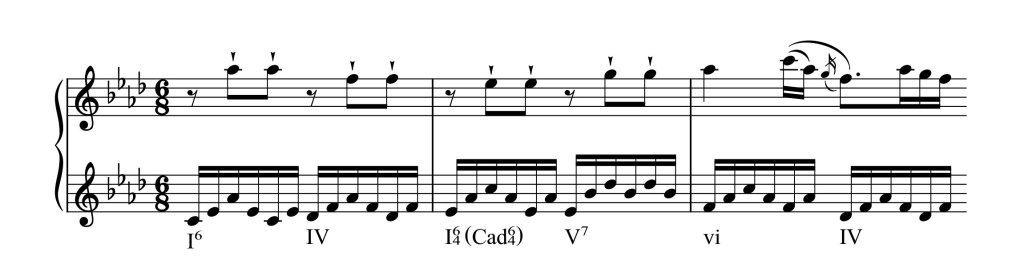
Consider a chord progression of the 6th example:
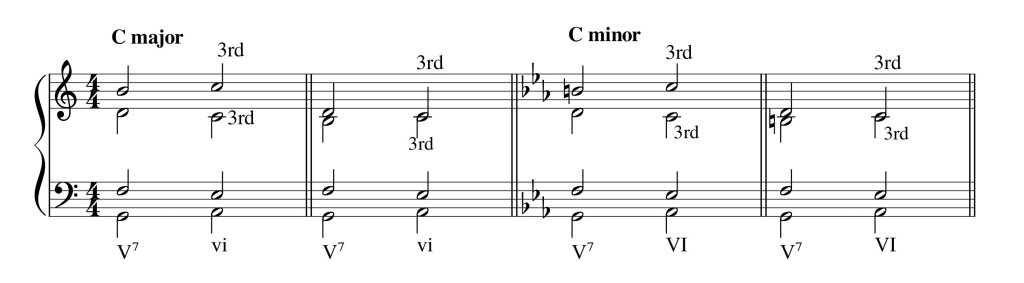
The submediant triad sounds beautiful when doubling the third in the soprano and in the alto either by octave or unison:
Example 7.
Due to common tones, the VI53 is often employed to create a smooth connection between tonic (I) and other predominant chords: subdominant (IV) and supertonic (II). Thanks to this intermediate role, the VI53 is referred to as a “submediant”.
Typically, it can be applied after I53, I2, V53, V7 and before such predominant chords as IV53, IV6, II53 (only in major), II6, II7, II65, II43, and also in phrygian tetrachord in bass:
Example 8.
In the harmonic major with the sixth scale degree lowered, VI53 becomes an augmented triad due to the augmented fifth between the root and the fifth tone (the third scale degree). The semitone transition from the 6th scale degree in the natural major to lowered 6th degree in the harmonic major adds sensuality to a music piece:
Example 9.

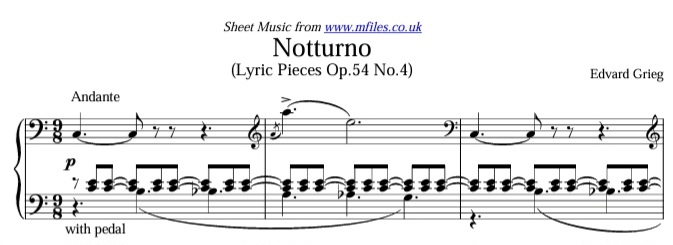
Edward Grieg used this chord progression in the second measure of his famous Nocturne op.54, No.4:
Example 10.
VI53 is widely used in pop-jazz chord progressions:
Example 11.
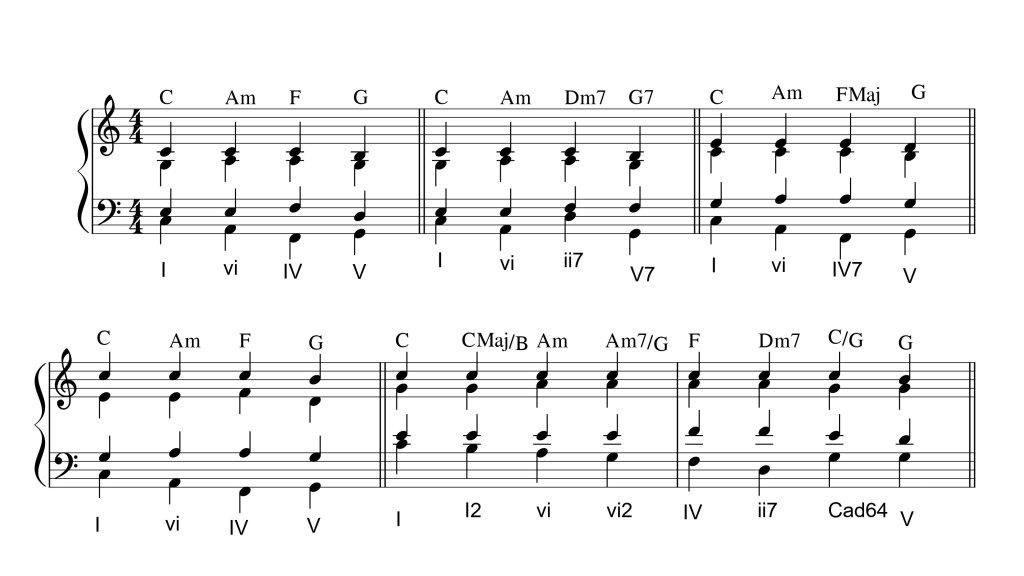
The 6th degree triad adds variety and sense of contrast, and, thus helps creating progressions that sound harmonically interesting and adds depth into the music compositions.
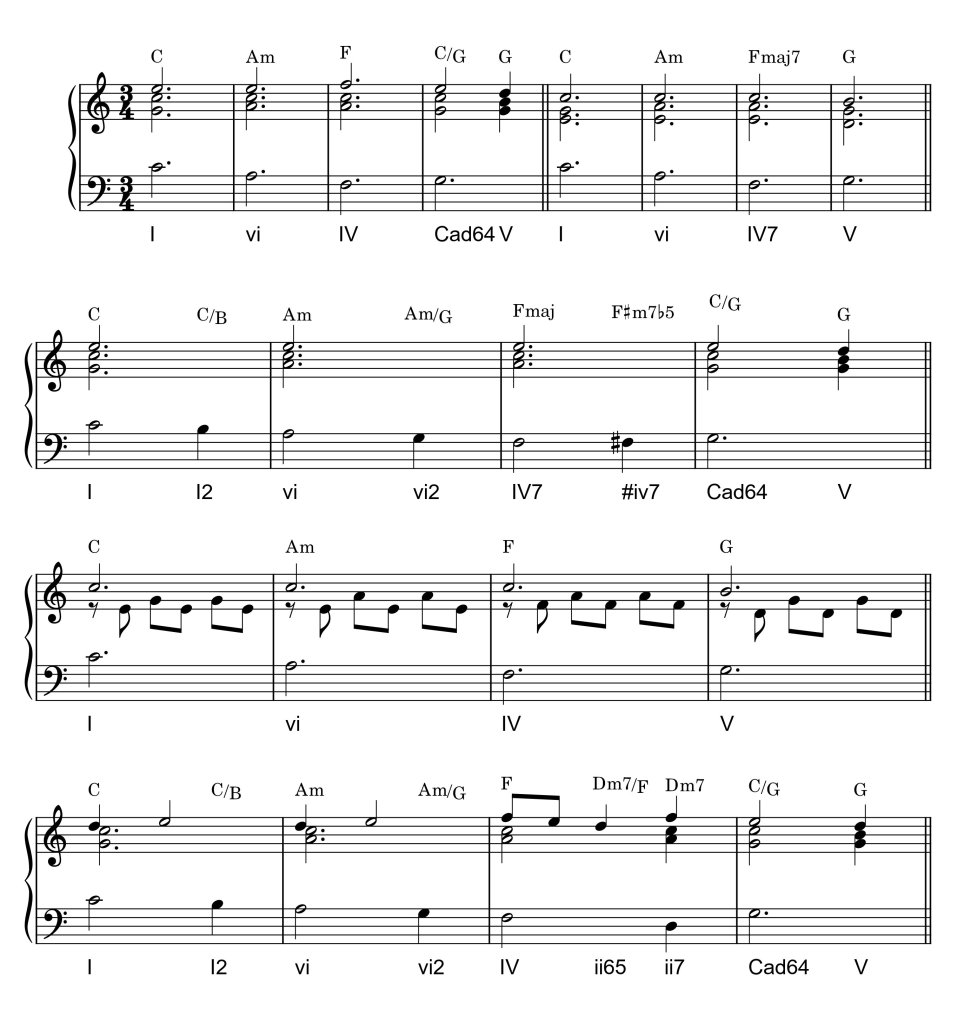
This harmonic motion can be further elaborated upon by adding embellishments or variations to the chords, leading to richer musical textures:
Example 12.
 Music theory explained
Leave a comment